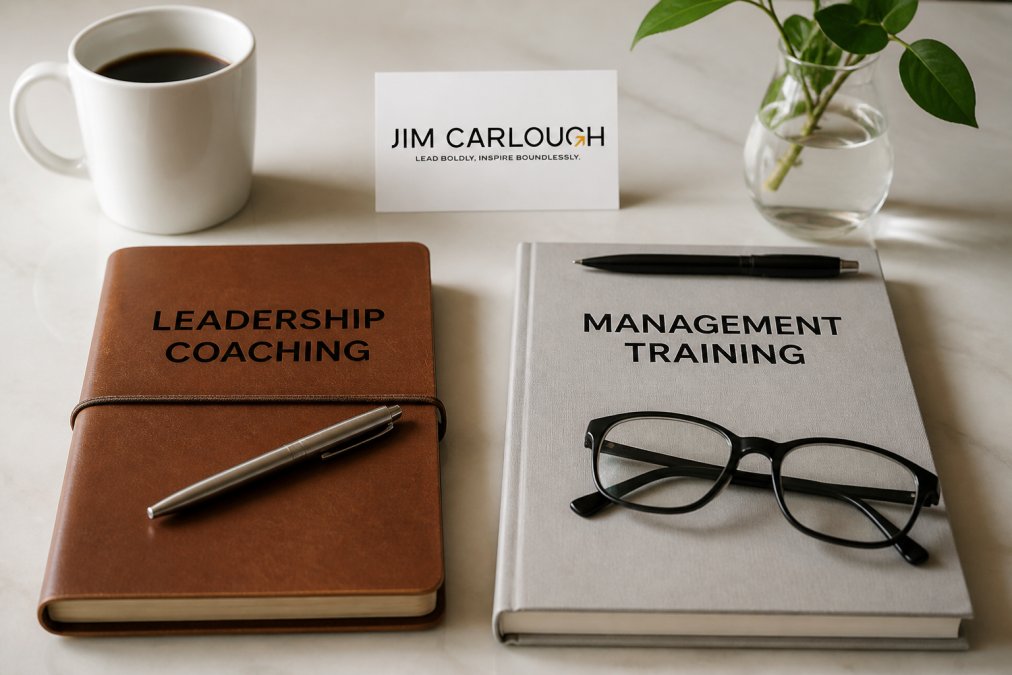
Leadership Coaching vs Management Training: Which You Need
Table of Contents
- Leadership Coaching vs Management Training: Core Definitions
- Key Differences: Focus, Scope, and Approach
- Leadership Coaching ROI and Long-Term Impact
- Leadership Coaching Examples: Real-World Applications
- Management Training Curriculum: Structure and Outcomes
- When to Choose Leadership Coaching vs Management Training
- Budgeting and Cost-Benefit Analysis
- Conclusion
Last Updated: August 14, 2026
Leadership Coaching vs Management Training: Core Definitions
Leadership coaching is a one-on-one development process where a trained coach works with an individual leader to build self-awareness, clarify goals, and drive behavioral change through personalized guidance and accountability. Management training is a structured, curriculum-based program designed to teach groups of managers standardized skills and competencies in areas like planning, organizing, delegation, and team dynamics.

The distinction matters because they serve fundamentally different purposes. Coaching targets the person, their identity, presence, and how they show up. Training targets the role and the specific functions managers need to execute effectively. Coaching works through behavioral change and identity development over months. Training works through skill acquisition and standardized application over days.
Key Differences: Focus, Scope, and Approach
Leadership coaching and management training diverge in three critical ways: who they target, what they teach, and how change happens.
Individualized Development vs Standardized Curriculum
Leadership coaching is inherently personalized. A coach meets with one leader, assesses their specific challenges, and designs interventions around their unique context. If a VP struggles with executive presence and team trust, the coaching focuses on those exact issues.
Management training delivers the same curriculum to a room full of managers. A program on conflict resolution teaches the same framework to everyone, which works well for foundational skills but misses individual nuances. This creates the first real trade-off: scalability versus precision. Training can reach 50 managers in a week. Coaching can reach one leader deeply over three months.
For organizations with broad skill gaps or newly promoted managers, training is efficient. For leaders with specific behavioral patterns holding them back, coaching is necessary.
Behavioral Change vs Skill Acquisition
Management training teaches what to do. Leadership coaching develops who you are.
Training programs teach managers specific competencies: how to structure a one-on-one, how to give feedback, how to manage conflict. Coaching addresses the beliefs and patterns underneath behavior. A manager might know intellectually that they should delegate more, but if they fundamentally don't trust their team, that knowledge won't change their actions. A coach works on the trust issue, which then naturally shifts behavior.
This explains why some managers complete training programs and revert to old patterns within weeks. The skill was acquired, but the underlying identity didn't shift.
Directive vs Non-Directive Approaches
Management training is typically directive. An instructor teaches best practices and guides participants toward established solutions. Leadership coaching is non-directive. A coach asks powerful questions and helps the leader discover their own insights and solutions.
Solutions a leader discovers themselves tend to stick because they own them. Solutions handed down from training can feel external or theoretical.
Leadership Coaching ROI and Long-Term Impact
The return on leadership coaching is difficult to quantify immediately, which is why many organizations hesitate. But the impact compounds over time in ways training rarely does.
A single leader who works through coaching often becomes a multiplier. They shift how they lead, which changes team dynamics, improves retention and engagement, and reshapes organizational culture. The timeline for coaching ROI is longer than training, but organizations that measure coaching impact often track team engagement scores, retention rates, internal promotion rates, and leadership effectiveness ratings. Leaders who engage in coaching typically see improvements within 6-12 months.
The real ROI isn't just in the individual leader's performance, it's in the leaders they develop and the culture they shape. Training is an expense. Coaching is an investment in organizational capability.
Leadership Coaching Examples: Real-World Applications
Consider a VP of operations promoted into a role where she manages peers. She has strong technical skills but struggles with executive presence. In meetings with the C-suite, her ideas don't land. Training on executive communication might help, but the real issue is her belief that she doesn't belong at that table. Coaching addresses that identity gap. Over three months, a coach helps her see her value and shift how she experiences herself in that role. Her presence changes because her internal narrative changed.
Or consider a director known for micromanaging. His team is talented but frustrated. He knows he should delegate more, but he doesn't trust his team to execute at his standards. Training on delegation won't solve that. Coaching does. A coach works with him on the belief driving the behavior: where does that need for control come from? What would it mean to trust his team? Over time, his trust develops and his management style naturally shifts.
Management Training Curriculum: Structure and Outcomes
Management training programs follow a predictable structure designed for consistency and scalability. Most include foundational modules covering core management functions like planning, organizing, delegation, and team dynamics; skill-building workshops teaching specific competencies like giving feedback or handling difficult conversations; assessment components that help managers understand their current style; and action planning where managers apply what they've learned.
Programs like the Center for Creative Leadership's Leadership Development Program (a 5-day intensive) or Dale Carnegie's Leadership Training for Results follow this model. They're research-based, proven effective for teaching management competencies, and designed to work across industries.

The outcomes are typically measured as skill acquisition: Do participants understand the frameworks? Can they apply the techniques? The strength of this model is consistency and reach. The weakness is that it doesn't address individual behavioral patterns or identity-level shifts that sometimes block managers from actually using what they've learned.
When to Choose Leadership Coaching vs Management Training
The decision hinges on three questions: What's the actual problem? What's your timeline? What's your budget?
Choose management training when:
Your organization has broad skill gaps among managers. You've promoted people into management roles who lack foundational competencies. You need to establish baseline management practices across a group. You have limited budget and need to reach many people efficiently.
Choose leadership coaching when:
You're developing senior leaders or high-potential managers for advancement. A specific leader has behavioral patterns holding them back. You need behavioral or identity-level change, not just skill acquisition. You have identified leaders who are critical to organizational success.
Most organizations need both. New managers benefit from training to build competency. Experienced leaders benefit from coaching to shift patterns and develop presence.
Assessment Tools for Determining Your Needs
Skills inventory: Map the specific management competencies your leaders need. Assess where your current leaders are strong and where they're weak. Widespread gaps suggest training. Individual gaps suggest coaching.
Performance data: Look at retention rates, team engagement scores, and promotion velocity. If your problem is that managers aren't retaining talent, coaching might address underlying patterns. If your problem is that managers lack basic skills, training is the answer.
Leadership maturity assessment: Evaluate where your leaders are in their development. Early-career managers benefit most from training. Experienced managers with specific behavioral patterns benefit from coaching.
Integration Frameworks for Combined Approaches
The most effective organizations use both. Training first, then coaching: New managers receive foundational training to build competency. High-potential managers then engage in coaching to deepen capability and prepare for advancement. Or coaching to support training: Leaders participate in training, then work with a coach to translate learning into behavioral change. The coach helps them examine why they might resist the new approach and supports implementation.
Budgeting and Cost-Benefit Analysis
Management training costs vary by program. Intensive programs like the Center for Creative Leadership run approximately $8,250 per person for a 5-day program. Dale Carnegie's programs range from $2,395 to higher amounts depending on scope. For organizations training 20-50 managers, the total investment is substantial but the per-person cost is lower than coaching.
Leadership coaching costs depend on the coach and engagement model. For detailed pricing and to understand what fits your budget and timeline, visit Jim Carlough's leadership coaching services.
Cost-benefit considerations:
Training has lower per-person cost but reaches many people with a standardized intervention. Coaching has higher per-person cost but delivers individualized, deeper impact on specific leaders. If you're training 30 new managers, training is more cost-effective. If you're developing your top 5 leaders for executive roles, coaching delivers better ROI despite higher individual cost.
Consider also the multiplier effect: a leader who shifts through coaching often develops their team differently, which improves retention and engagement across their department. The real decision isn't "which costs less" but "which solves our actual problem."
The choice between leadership coaching and management training isn't binary. The most effective organizations use both, strategically deployed based on where leaders are in their development and what specific challenges they face.
Training builds the foundation. Coaching transforms how leaders show up. Together, they create a development system that moves leaders from competent to influential, from doing the job to leading with presence and impact.
If you're leading a team of managers or developing your organization's leadership bench, Jim Carlough's approach focuses on exactly this: building confidence, clarity, and influence through character-driven leadership. With over 30 years of experience in enterprise transformation, Jim works with leaders to move beyond titles and develop the identity and presence that drives real organizational change. Learn more about Jim Carlough's executive coaching and leadership development programs to explore how personalized coaching can complement your training investments and accelerate leadership impact across your organization.
Frequently Asked Questions
What is the primary difference between leadership coaching and management training?
Leadership coaching focuses on individualized behavioral change and identity development through one-on-one relationships, addressing how a leader shows up in specific situations. Management training delivers standardized skill acquisition through structured curricula, teaching functional competencies like planning, organizing, and conflict resolution. Coaching is directive or non-directive based on the coach's methodology; training typically uses directive instruction. The choice depends on whether you need to shift how a leader thinks and behaves or build specific management functions across a team.
Is leadership coaching worth the investment for mid-level managers?
Leadership coaching ROI depends on the specific challenge. Mid-level managers struggling with executive presence, team trust, or behavioral patterns typically see measurable returns through improved retention, team engagement, and readiness for promotion. Managers who need foundational skills in budgeting or project management may benefit more from training. The investment pays off when the manager is committed to change and when organizational alignment supports behavioral shifts. Without both, ROI remains limited.
Can management training replace the need for executive coaching?
Management training and executive coaching serve different purposes. Training builds competencies; coaching shifts identity and behavior. A leader can complete training on communication or delegation and still micromanage or lack presence because the underlying beliefs haven't changed. For leaders struggling with how they show up, trust issues, confidence gaps, or identity misalignment with their role, coaching addresses the root cause. Many organizations find the best results come from combining both approaches strategically.
How do you determine if an employee needs coaching or training?
Ask whether the gap is a skill deficit or a behavioral one. If the person doesn't know how to budget, run a meeting agenda, or structure a plan, training closes that gap. If they know how but don't execute consistently, avoid accountability, or struggle with influence and presence, coaching is needed. Assessment tools like 360-degree feedback, behavioral interviews, or talent reviews reveal which type of gap exists. The strongest approach uses both: training builds the foundation, coaching embeds the behavior.
What are the long-term benefits of leadership coaching compared to traditional training?
Leadership coaching creates sustained behavioral change and professional growth because it addresses identity and mindset, not just skills. Coaching builds confidence, clarity, and influence, qualities that compound over time and affect how a leader shows up in every situation. Training delivers immediate skill acquisition but often fades without reinforcement. Coaching's individualized focus means lasting shifts in how leaders handle conflict, build trust, and develop their teams. Organizations see longer-term returns through improved retention, succession readiness, and organizational alignment.
This article was written using GrandRanker