
7 Resilient Leadership Habits for Long-Term Success
Last Updated: October 28, 2026
Quick Summary
Resilient leadership is the practice of staying clear, steady, and effective under pressure, built through repeated daily actions rather than inherited at birth. It rests on emotional regulation and adaptability, supported by small daily habits, honest feedback, and recovery time you track and protect.
- Name the feeling silently, pause for one full breath, then ask what outcome you want from the next sentence.
- Resilient leaders size the bet by naming the worst case and whether the team can absorb it.
- Protect one ninety-minute focus block with no meetings and no notifications.
- Ask two trusted people each month what you do that makes their job harder.
- Track recovery time in your three-line log; if it creeps up, the fix is structural, not motivational.
Table of Contents
- What Makes Resilient Leadership a Daily Practice, Not a Personality Trait
- The Resilient Leadership Skills That Carry the Most Weight
- Daily Leadership Habits That Build Stamina
- Leadership Self-Awareness: The Habit Behind Every Other Habit
- Leadership Burnout Prevention Without Dropping Performance
- Building a Weekly and Monthly Habit System You Can Measure
- How to Keep These Habits Going After the First Setback
- Building Your Leadership Resilience Plan with Jim Carlough
- Frequently Asked Questions
What Makes Resilient Leadership a Daily Practice, Not a Personality Trait
Resilient leadership is the practice of staying clear, steady, and effective under pressure, and it is built through repeated daily actions rather than inherited at birth.
Most people assume resilience is a reserve you either have or lack. That framing fails because it leaves no room for improvement. A leader who freezes in a hard quarter is not missing a gene. They are missing routines.
That is good news. Habits can be built, measured, and rebuilt after a setback. This guide breaks down seven habits that carry long-term success, with the practical steps to install each one.
The core argument here is simple: resilience is a system, not a mood. You do not rise to the occasion. You fall to the level of your routines.
The Resilient Leadership Skills That Carry the Most Weight
Two skills do most of the work: emotional regulation and adaptability. Research from the American Psychological Association on stress and coping consistently points to how people manage pressure, not how much pressure they face, as the deciding factor. Below is how each skill shows up in real work.
Emotional Regulation Under Pressure
Emotional regulation is the ability to notice a strong feeling and choose your response instead of reacting on autopilot. It is the skill that separates a leader who calms a room from one who heats it up.
A common mistake is treating regulation as suppression. Biting your tongue is not regulation. It is a pressure valve that eventually bursts.
Try this instead:
- Name the feeling silently before you speak
- Pause for one full breath
- Ask what outcome you want from the next sentence
Leaders who master it tend to develop clarity in uncertain times, and it is worth reading more on how to develop leadership clarity in uncertain times if pressure is your daily reality.
Adaptability and Calculated Risk-Taking
Adaptability is the willingness to change course when evidence shifts, without treating every change as a crisis. Calculated risk-taking is its partner: moving forward with incomplete information while naming the downside out loud.
Resilient leaders do not gamble. They size the bet. They ask what the worst case costs and whether the team can absorb it. That is how change management stops feeling like chaos and starts feeling like a plan.
Daily Leadership Habits That Build Stamina
Daily leadership habits are the small, repeatable actions that protect your energy and sharpen your judgment. They work because they remove decisions. When the routine is fixed, willpower is freed for the work that matters.
- Start with a two-minute plan. Write the one outcome that would make today a win.
- Protect one focus block. Ninety minutes, no meetings, no notifications.
- Take a real break. Walk, breathe, step outside. Not a scroll.
- Close the loop on one hard conversation. Do not let it fester overnight.
- End with a three-line log. What worked, what drained you, what you will adjust.
Self-awareness is where the next section begins.
Leadership Self-Awareness: The Habit Behind Every Other Habit
Leadership self-awareness is the practice of seeing your own patterns clearly enough to change them. Without it, every other habit runs blind.
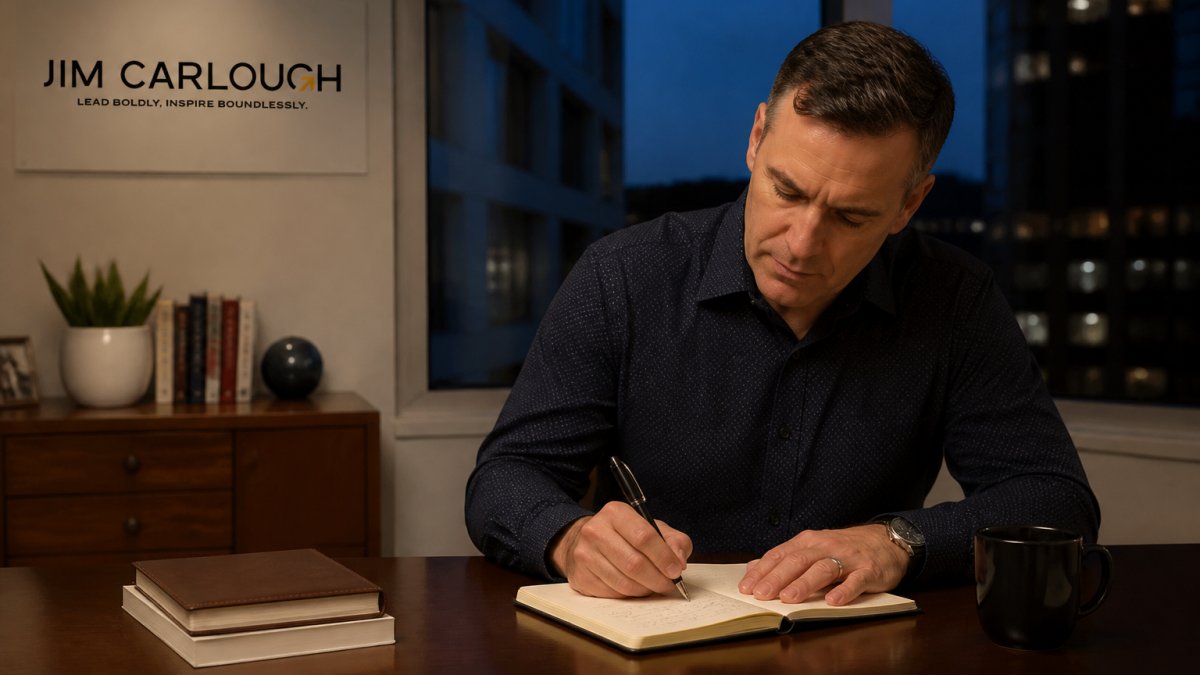
Ask two people you trust one question each month: "What is one thing I do that makes your job harder?"
Self-awareness connects directly to identity. Leaders who know who they are stop performing a role and start leading from a place that holds steady when the title changes. If that resonates, our guide on how to develop authentic leadership identity goes deeper into the identity side of this habit.
Leadership Burnout Prevention Without Dropping Performance
Stress management is not soft. It is the maintenance that keeps the machine running. The measurable part is recovery time: after a hard day or a hard week, how many hours does it take before your judgment returns to baseline? Track it in the same three-line log you use for daily habits. If recovery time is creeping up month over month, your load is outrunning your capacity, and the fix is structural, not motivational.
Building a Weekly and Monthly Habit System You Can Measure
| Layer | Habit | Frequency | What It Builds |
|---|---|---|---|
| Daily | Two-minute plan and three-line log | Every workday | Focus and self-awareness |
| Weekly | One hard conversation and one recovery block | Once per week | Trust and recovery |
| Monthly | Feedback check-in with two trusted peers | Once per month | Honest self-view |
A simple leadership resilience scorecard:
- Did I have the hard conversation this week?
- Did I protect my recovery block?
- Did I ask for feedback this month?
- Did I adjust one habit based on what I learned?
How to Keep These Habits Going After the First Setback
Learning from failure is a skill, and it is built in the reflection, not the fall. Leaders who use setbacks as information get stronger. Leaders who use them as verdicts get stuck. Sustained change also takes support: mentorship, peer groups, and honest feedback keep the habits alive when motivation dips. Seeing how other leaders have sustained this work can help; our client results and testimonials show what real change looks like over time.
Write your restart plan now, while things are calm: the trigger, the two-minute version, the person who will ask, and the date of your next review. A plan made under pressure is usually a plan to quit.
Building Your Leadership Resilience Plan with Jim Carlough
Our approach is character-driven. We focus on identity over titles. With more than 30 years of leadership experience and a proprietary six-pillar framework, we help leaders build confidence and clarity.
If you want the full picture of how we work with executives and teams, read our leadership development and executive coaching guide. And if you want to know the person behind the framework, you can learn more about Jim Carlough before you commit.
Frequently Asked Questions
What does resilient leadership actually mean?
Resilient leadership is the capacity to stay clear, steady, and effective when pressure rises. It is not toughness or never showing strain. It can involve emotional regulation, adaptability, and making decisions when information is incomplete.
What habits make a leader more resilient?
Examples of small, repeatable habits include daily reflection, an honest conversation, and a defined stop time; a weekly review and recovery block; and a monthly check on leading indicators such as feedback given or decisions delegated.
How can leaders prevent burnout while maintaining performance?
Treat recovery as part of the work, not a reward for finishing it. Leadership burnout prevention starts with protecting sleep, setting boundaries around availability, and delegating decisions you are still holding onto. Watch for early signals: cynicism, shorter patience, and a shrinking sense of control. Name them early and adjust your load. Sustainable performance comes from pacing, not from pushing harder through fatigue.
How do resilient leaders recover from setbacks?
They shorten the gap between the setback and the lesson. A practical routine is to write down what happened, what you controlled, and what you would do differently, then share it with one trusted colleague within a week. This turns a failure into continuous learning instead of rumination. Leaders who recover well also keep a support network and mentorship in place before they need it, so they are not processing a hard moment alone.
Resilience is not a trait you wait for. It is a set of habits you build, measure, and rebuild. If you are ready to stop relying on willpower and start building a system that holds under pressure, Jim Carlough can help. Our executive coaching and developmental programs focus on character-driven leadership, identity development, and the human skills that AI cannot replace. Get started with Jim Carlough and build leadership habits that last.