
How to Build Authentic Leadership Presence Virtually
Table of Contents
- Why Authentic Leadership Presence Gets Harder on a Screen
- Step 1: Define Your Leadership Identity Before You Touch a Camera
- Step 2: Build Virtual Communication Skills for Leaders Who Want to Be Heard
- Step 3: How to Build Trust With a Remote Team Through Consistent Habits
- Step 4: Executive Presence on Video Calls Without Sounding Rehearsed
- Step 5: Study Authentic Leadership Examples You Can Actually Copy
- Common Mistakes That Undermine Authentic Leadership Presence
- Conclusion: Presence Is a Practice, Not a Performance
- Frequently Asked Questions
Last Updated: October 19, 2026
Why Authentic Leadership Presence Gets Harder on a Screen
Authentic leadership presence is the ability to project confidence, clarity, and genuine character through a screen, without the room's energy to carry you. It gets harder virtually because the cues you relied on for years are gone. No handshake. No hallway chat. No reading the room in real time.
Here's the core tension: video strips away context but amplifies small signals. A half-second pause reads as doubt. A flat tone reads as disinterest. The medium rewards preparation over improvisation, which feels backwards to leaders who built careers on instinct.
So presence becomes something you design, not something you switch on. That's the throughline for everything below. We'll walk through five steps that turn virtual presence into a repeatable practice.
Step 1: Define Your Leadership Identity Before You Touch a Camera
Most leaders skip this step. They buy a ring light, fix their background, and wonder why they still feel invisible.
Identity comes first. Presence without a clear sense of who you are is just performance, and people detect performance fast.
Start with three questions. Write the answers down, because thinking them isn't enough:
- What three words do I want my team to use about me after a meeting?
- When have I felt most like myself as a leader?
- What do I do when I'm under pressure that I'd rather people didn't see?
That third question matters most. Your tells under stress are your presence leaks. Naming them is the first move toward managing them.
Step 2: Build Virtual Communication Skills for Leaders Who Want to Be Heard
Virtual communication skills for leaders come down to three habits: shorter sentences, deliberate pauses, and camera-level eye contact. Get those right and people lean in. Miss them and you fade into the grid.
Short sentences travel better through compressed audio. Long, winding points get lost in lag and buffering.
Pauses feel longer to you than to them. A full two-second pause after a key point reads as confidence, not awkwardness.
Eye contact means looking at the lens, not at faces on the screen. It feels unnatural. Do it anyway.
Then there's the question habit. Leaders who ask one real question per meeting get more airtime and more trust than leaders who talk more. Try ending updates with "What am I missing here?" and then actually wait.
Step 3: How to Build Trust With a Remote Team Through Consistent Habits
Trust on a remote team is built through repetition, not grand gestures. If you want to know how to build trust with a remote team, start with what you do every single week, not what you say at the quarterly all-hands.
Consistency is the whole game. A leader who shows up the same way on a Tuesday standup and a Friday crisis earns credibility that no motivational speech can buy.
Habits that carry weight:
- Open every meeting with a two-minute check-in that isn't about work
- Follow through on small commitments within the same day when possible
- Share one thing you got wrong each month, out loud
- Protect your one-on-ones even when the calendar gets ugly
That last one is where most leaders fail. Canceling a one-on-one tells the person they're optional. Keeping it, even for fifteen minutes, tells them they're not.
Step 4: Executive Presence on Video Calls Without Sounding Rehearsed
Executive presence on video calls is the ability to sound decisive and human at the same time. The trick isn't memorizing a script. It's preparing the first thirty seconds and the last thirty seconds, then letting the middle breathe.
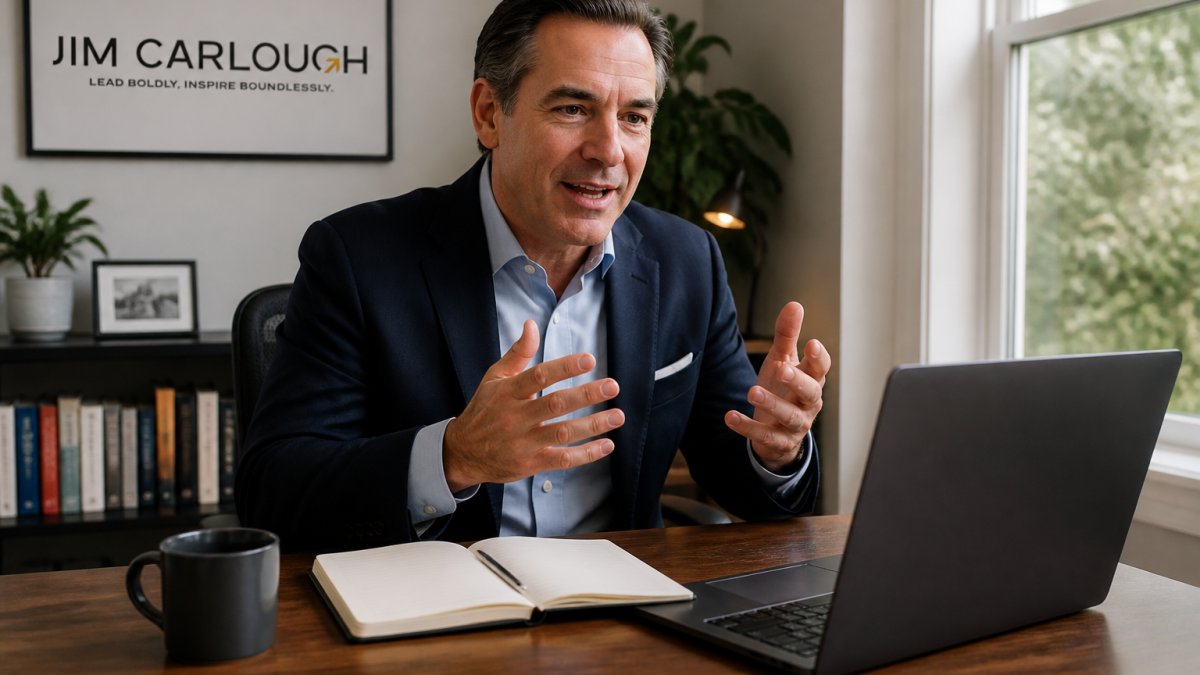
Rehearsed leaders sound like they're reading. Unprepared leaders ramble. The middle path is structure without a script.
Try this format for high-stakes calls:
- State the decision or point in one sentence
- Give the reason in two sentences
- Name the trade-off you accepted
- Invite the pushback
That structure keeps you tight without sounding robotic. The invitation at the end is what makes it feel like a conversation rather than an announcement.
Step 5: Study Authentic Leadership Examples You Can Actually Copy
The best authentic leadership examples aren't famous speeches. They're small, repeatable behaviors you can borrow this week.
Look for leaders who admit uncertainty without losing authority. Watch how they say "I don't know yet, and here's how I'll find out." That sentence builds more trust than a confident bluff ever will.
Study the leaders in your own organization who people actually want to work for. Ask them what they do before a hard conversation. Most will tell you they write down the outcome they want and one sentence of honesty they plan to say.
Copy the structure, not the personality. Presence is personal, but the mechanics are learnable.
Common Mistakes That Undermine Authentic Leadership Presence
The fastest way to lose presence is to chase someone else's version of it. Here are the mistakes we see most often:
| Mistake | Why It Backfires | Better Move |
|---|---|---|
| Copying a famous leader's style | Reads as imitation, not identity | Borrow structure, keep your own voice |
| Over-preparing every sentence | Sounds scripted and distant | Prepare openings and closings only |
| Hiding stress signals | People read them anyway | Name the pressure once, briefly |
| Talking more to fill silence | Dilutes your message | Pause and let the room respond |
| Skipping one-on-ones when busy | Signals the person is optional | Keep them short, never cancel |
Conclusion: Presence Is a Practice, Not a Performance
Building authentic leadership presence virtually takes reps, not polish. The leaders who get there treat it like a skill they practice weekly, not a switch they flip before a big call.
If you're ready to go deeper, Jim Carlough offers executive coaching, keynote speaking, and developmental programs built around character-driven leadership. Our work centers on the six foundational pillars of leadership, with a focus on identity and human connection rather than titles. You'll leave with concrete strategies for confidence, clarity, and influence, plus the habits that make them stick.
Book Jim to speak and give your leaders a presence practice they can actually sustain.
Frequently Asked Questions
What does authentic leadership presence look like in a virtual setting?
It looks like consistency across channels. A leader with authentic leadership presence shows the same priorities in a video call, a Slack thread, and a one-on-one. Practically, that means showing your face on camera when it matters, answering questions directly instead of deflecting, and admitting what you do not know. Remote teams read presence through small signals: whether you respond, whether you follow through, and whether your tone matches your words. Presence is not charisma on a screen; it is reliability plus candor, repeated long enough that people trust it.
How do you appear confident on video calls without seeming rehearsed?
Prepare the first 30 seconds and the one decision you need from the meeting, then stop scripting. Confidence on camera comes from knowing your point, not memorizing sentences. Look at the lens, keep your hands visible, and pause instead of filling silence with filler words. If you lose your train of thought, say so plainly and restate your point. Audiences trust a leader who recovers cleanly more than one who delivers a flawless script. Rehearse your opening line out loud twice, then let the rest be a real conversation.
How can leaders build trust with a remote team when they rarely meet in person?
Trust with a remote team comes from predictability and follow-through. Commit to a few repeatable habits: a weekly written update with priorities and blockers, a standing one-on-one where you listen more than you talk, and a fast response window you actually keep. Say what you will do, then do it, and tell people when plans change. When you make a mistake, name it in the same channel where you made it. Teams trust leaders whose behavior they can forecast, and remote work removes the hallway cues that used to carry that signal.
Can virtual communication skills for leaders be improved, or is presence something you are born with?
These skills are learnable. Virtual communication skills for leaders break down into specific behaviors: structuring a message before you send it, choosing the right channel for the stakes, running a meeting with a clear decision at the end, and giving feedback that is specific rather than vague. Each one can be practiced and measured. Start with one habit, such as ending every meeting with a written recap of decisions and owners, and hold it for a month. Authentic leadership presence is built from these repeatable behaviors, not from natural charisma.