
Building Executive Influence: A Realistic Timeline
Table of Contents
- How Long to Develop Executive Influence: The Short Answer
- Executive Influence vs. Executive Presence: What You're Actually Building
- The Timeline: Milestones From Month One to Month Six
- How to Build Executive Presence Through Leadership Influence Skills
- Personalizing Your Timeline: Starting Point and Context
- Executive Coaching Effectiveness: What the Evidence Supports
- Measuring Leadership Development Progress Over Time
- A Practical Weekly Development Plan
- Frequently Asked Questions
Last Updated: October 18, 2026
How Long to Develop Executive Influence: The Short Answer
Most leaders see real movement in executive influence within three to six months of targeted, deliberate practice.
The honest version: you will notice a shift in how people respond to you in roughly 90 days. Others will notice it in about six months.
Below, we break down a realistic month-by-month timeline, how to measure progress, and a weekly plan you can start this week.
Executive Influence vs. Executive Presence: What You're Actually Building
Executive presence is how you show up in a room: your posture, your calm, your command of the moment. Executive influence is what happens after you leave the room.
Presence is a signal. Influence is the outcome. You can have strong presence and weak influence if your follow-through is inconsistent.
That distinction matters because it changes what you practice. Presence work is largely about communication and body language. Influence work adds credibility, consistency, and stakeholder relationships on top.
The Timeline: Milestones From Month One to Month Six
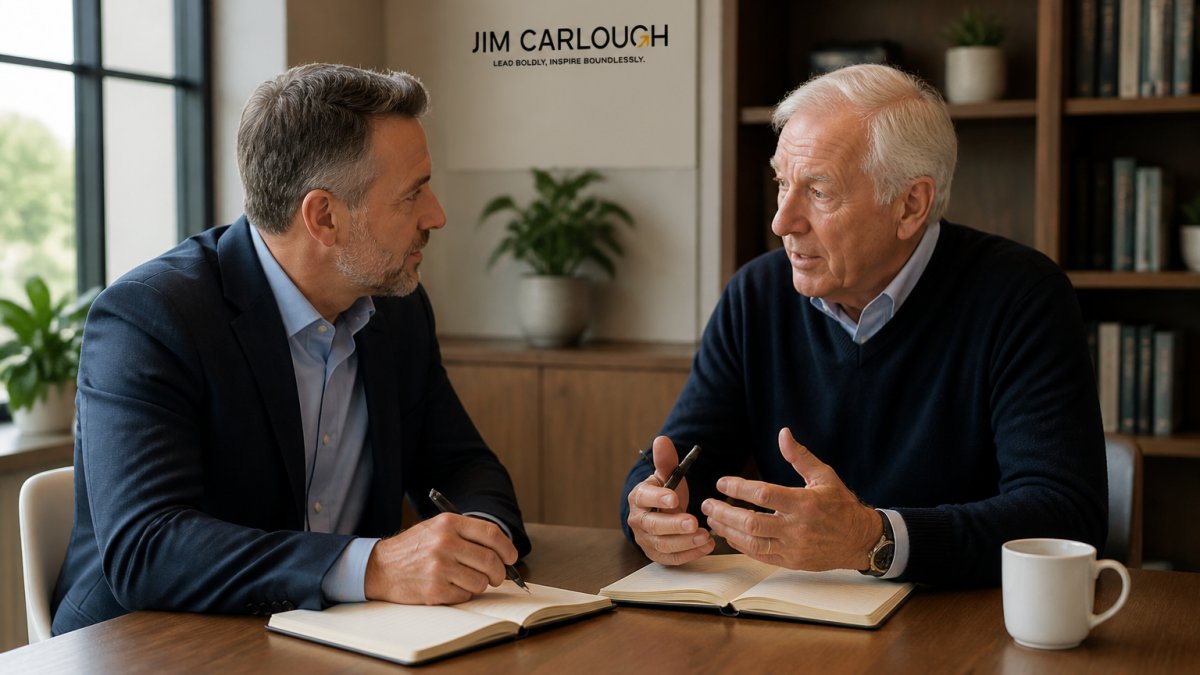
The three-to-six-month window is not a promise; it is a planning range. It assumes roughly two hours of deliberate practice per week, at least one honest feedback source, and regular exposure to high-stakes moments.
Here is how the window breaks down, with a concrete finish line for each phase so you can tell whether you are actually moving.
| Phase | Months | Core Focus | Milestone (How You Know You're Done) |
|---|---|---|---|
| Foundation | 1-2 | Self-awareness and feedback | You can name your two biggest influence gaps and cite specific examples of each |
| Practice | 3-4 | Communication and high-stakes moments | You stay clear and composed in at least three unscripted high-pressure moments |
| Integration | 5-6 | Stakeholder relationships and consistency | At least two stakeholders outside your chain of command seek your input before decisions |
| Sustained growth | 7+ | Compounding credibility | Your follow-through rate holds above 90% for a full quarter |
Months 1-2: Self-Awareness and Feedback
The first phase is uncomfortable on purpose. You gather honest input on how others experience you.
Ask five to eight people who work with you a simple question: what is one thing I do that makes it harder to follow me?
A practical mechanism: keep a running "influence log" for two weeks. After each significant meeting, note one moment where you gained traction and one where you lost it.
Months 3-4: Communication and High-Stakes Moments
This phase turns insight into behavior. You practice speaking with clarity, controlling your pace, and using purposeful pauses.
In practice, this means scripting your opening line before big meetings. It means slowing down when you feel rushed.
The milestone here is behavioral, not emotional. You are done with this phase when you can point to at least three high-pressure moments where you stayed clear and composed without needing to rehearse afterward.
Months 5-6: Stakeholder Relationships and Consistency
The final phase is where influence becomes durable. You build deliberate relationships across the organization, not just with your direct reports. You follow through on small commitments so your word carries weight.
Consistency is the whole game here. One strong quarter does not build influence. Repeated reliability does. The milestone is observable: at least two stakeholders outside your chain of command begin seeking your input before decisions are made, not after.
Why the Timeline Slips
Most leaders who take longer than six months are not failing at the work; they are missing one of the inputs. The three most common causes of a stretched timeline are:
- No honest feedback loop. Without a trusted source of candid input, leaders practice the wrong behaviors confidently.
- Too few high-stakes reps. Influence is built in pressure moments. A leader who avoids them has nothing to practice on.
- Team instability. Constant turnover resets trust, and trust is the currency influence runs on.
If any of those apply, plan for six to nine months rather than three to six. That is not a failure of the method; it is an honest read of the conditions.
How to Build Executive Presence Through Leadership Influence Skills
Leadership influence skills and executive presence grow together, but you train them differently. Presence comes from how you carry yourself. Influence comes from how you treat people and follow through.
Here is what to work on:
- Active listening: Let people finish before you respond. Reflect back what you heard.
- Meaningful pauses: Stop talking for two seconds before answering a hard question.
- Speaking pace: Slow down. Rushed speech reads as nervous, not urgent.
- Nonverbal communication: Open posture, steady eye contact, still hands.
- Self-awareness: Notice when you get defensive, and name it internally before reacting.
Personalizing Your Timeline: Starting Point and Context
No two leaders develop at the same speed. Your timeline depends on where you start and the environment you work in.
Ask yourself three questions:
- How much honest feedback do you already get? Leaders with a trusted feedback loop move faster.
- How often are you in high-stakes moments? More reps means faster growth.
- How stable is your team? Constant turnover slows influence building because trust resets.
A leader who already communicates well but lacks follow-through may need only three months. A leader rebuilding credibility after a rocky season should plan for six to nine.
Executive Coaching Effectiveness: What the Evidence Supports
Executive coaching effectiveness is well documented in the leadership development field. Industry research consistently links structured coaching to improved self-awareness, better communication, and stronger stakeholder relationships.
What coaching will not do is change you in a week. Skeptics are right to push back on hype.
At Jim Carlough, coaching is built on character-driven leadership: developing identity and human connection rather than chasing a title. That framing matters because influence that rests only on technique fades under pressure.
Measuring Leadership Development Progress Over Time
Measuring leadership development progress is where most programs fall apart. Leaders feel different but cannot prove it. The fix is not more intuition; it is a small set of observable indicators tracked against a baseline, on a fixed cadence, with a clear line between what is measurable and what is merely impression.
Start by establishing a baseline in month one. Before you change any behavior, capture where you stand on each indicator below. Without a baseline, every later number is a guess.
The Five Observable Indicators
- Decision input: Are you asked for your view before decisions, or after? Track the ratio over a month. A shift from mostly-after to mostly-before is one of the clearest signs influence is growing.
- Follow-through rate: Do you close commitments on time? Log every commitment you make for two weeks and mark whether it closed on schedule. Most leaders are surprised by their actual rate.
- Meeting dynamics: Do people speak up more when you are in the room? This is harder to measure directly, so ask a trusted peer to observe one meeting per month and note who initiates and who defers.
- 360 feedback: Re-run the same short survey every 90 days. Keep the questions identical so the comparison is valid. Changing the questions between rounds destroys the signal.
- Escalations: Are conflicts reaching you less often because they are resolved earlier? A falling escalation count, paired with stable team performance, suggests influence is distributing rather than concentrating.
Measurable Progress vs. Subjective Impression
The distinction matters because leaders routinely confuse the two. Measurable progress has a baseline, a cadence, and a comparison. Subjective impression has none of those.
A leader who says "I feel more confident in meetings" has an impression. A leader who says "I was asked for input before three of the last five decisions, up from zero of five in month one" has a measurement.
A Simple Quarterly Review
Every 90 days, sit down with your baseline and answer three questions in writing:
- Which indicator moved the most, and what behavior drove it?
- Which indicator did not move, and what is the most likely cause?
- What is the one behavior you will change in the next 90 days based on the answer to question two?
This review takes about 30 minutes and is the difference between a development plan that compounds and one that quietly stalls. The leaders who sustain influence over years are almost always the ones who review it on a schedule rather than waiting for a performance cycle to tell them how they are doing.
A Practical Weekly Development Plan
Consistency beats intensity. This weekly plan fits around a full calendar and takes about two hours total.
- Monday (15 min): Pick one high-stakes moment this week and script your opening line.
- Tuesday (20 min): Have one listening-only conversation. Ask, then do not interrupt.
- Wednesday (15 min): Review one recorded meeting or ask a peer for one piece of feedback.
- Thursday (20 min): Reach out to one stakeholder outside your team. Build the relationship before you need it.
- Friday (20 min): Log your follow-through. Did you close every commitment you made?
- Weekend (10 min): Write one sentence on what you will do differently next week.
Frequently Asked Questions
How long does it take to develop executive influence?
Most leaders see observable improvement in executive influence within three to six months of targeted, consistent practice. The first four to six weeks typically go to self-awareness and feedback gathering. Months two and three focus on communication habits and high-stakes moments. Months four through six concentrate on stakeholder relationships and consistency under pressure. Leaders starting from a strong communication base may move faster; those unlearning long-standing habits, such as micromanaging, usually need the full window or longer.
Does executive coaching actually work for building influence?
Executive coaching effectiveness depends on structure and follow-through. Coaching that includes 360-degree feedback, specific behavioral goals, and regular accountability check-ins produces measurable change in how leaders communicate and build trust. Coaching that stays abstract, with no practice between sessions, rarely moves the needle. Ask any coach how they measure progress before you commit. Look for defined milestones, stakeholder feedback loops, and a clear timeline rather than open-ended sessions.
How can you measure leadership development progress?
Measuring leadership development progress requires more than self-report. Track three things: stakeholder feedback gathered before and after the program, observable behavior changes in meetings and high-stakes moments, and outcomes such as team engagement scores or retention on your direct team. Short pulse surveys of peers and direct reports every six to eight weeks give you a concrete read. Pair those with a simple self-assessment rubric scored monthly so you can see whether the trend is real or just a good week.
Can you build influence without relying on your title?
Yes, and the strongest leaders do. Influence built on title alone collapses the moment you change roles or face a peer with equal authority. Influence that lasts comes from credibility earned through follow-through, clear communication, and active listening. Practically, that means doing what you say you will do, asking questions before offering opinions in high-stakes meetings, and giving credit publicly. Those habits compound over three to six months into a reputation that travels with you regardless of your org chart position.
Building executive influence is not a confidence trick or a weekend seminar. It is a deliberate practice, measured over months, built on character and consistency. Jim Carlough has spent more than 30 years helping leaders develop exactly that: confidence, clarity, and influence through character-driven coaching and development programs. If you are ready to move beyond your title and build influence that lasts, book Jim to speak or start a coaching conversation today.