
Ethical Considerations for AI in Leadership 2026 Review
Table of Contents
- Why Ethical AI Leadership Matters in 2026
- AI Governance Frameworks for Leaders: A Practical Review
- Mitigating Algorithmic Bias in Management Workflows
- Best Practices for AI-Driven Decision Making
- Psychological Safety in AI-Augmented Teams
- AI Ethics Audit Checklists for Leadership Teams
- Cross-Cultural Ethical AI Perspectives for Global Leaders
- Conclusion: Leading with Character in the Age of AI
- Frequently Asked Questions
Last Updated: September 16, 2026
Why Ethical AI Leadership Matters in 2026
The ethical considerations for AI in leadership 2026 review comes down to one uncomfortable truth: the tools moved faster than the judgment. According to NIST AI Risk Management Framework, organizations deploying AI systems are expected to build governance, transparency, and accountability into the lifecycle, not bolt it on afterward. Yet most leadership teams still treat AI ethics as a legal checkbox rather than a leadership discipline. Jim Carlough has spent three decades watching enterprise transformations succeed or stall on exactly this gap.
The Shift from Efficiency to Accountability
Efficiency was the 2023 conversation; accountability is the 2026 one. Leaders must now explain not just what an AI system did, but who authorized it, what data trained it, and how a human can override it.
AI Governance Frameworks for Leaders: A Practical Review
AI governance frameworks for leaders are the policies, oversight structures, and review processes that determine who approves an AI system, what it's allowed to decide, and how its outcomes get audited. The best frameworks assign named owners, not committees. Here's how the leading platforms compare:
| Platform | Best For | Standout Feature | Free Tier |
|---|---|---|---|
| IBM watsonx.governance | Regulated enterprises | Automated model inventory and audit trails | No |
| Credo AI | Cross-functional policy alignment | Compliance mapping to NIST AI RMF | No |
| Microsoft Responsible AI Dashboard | Azure-based teams | Counterfactual analysis and error review | Yes |
| Fiddler AI | Real-time model monitoring | Explainability and bias alerting | No |
| Arthur AI | Large-scale ML oversight | LLM performance and fairness tracking | No |
| WhyLabs | Low-barrier guardrails | Anomaly detection and AI guardrails | Yes |
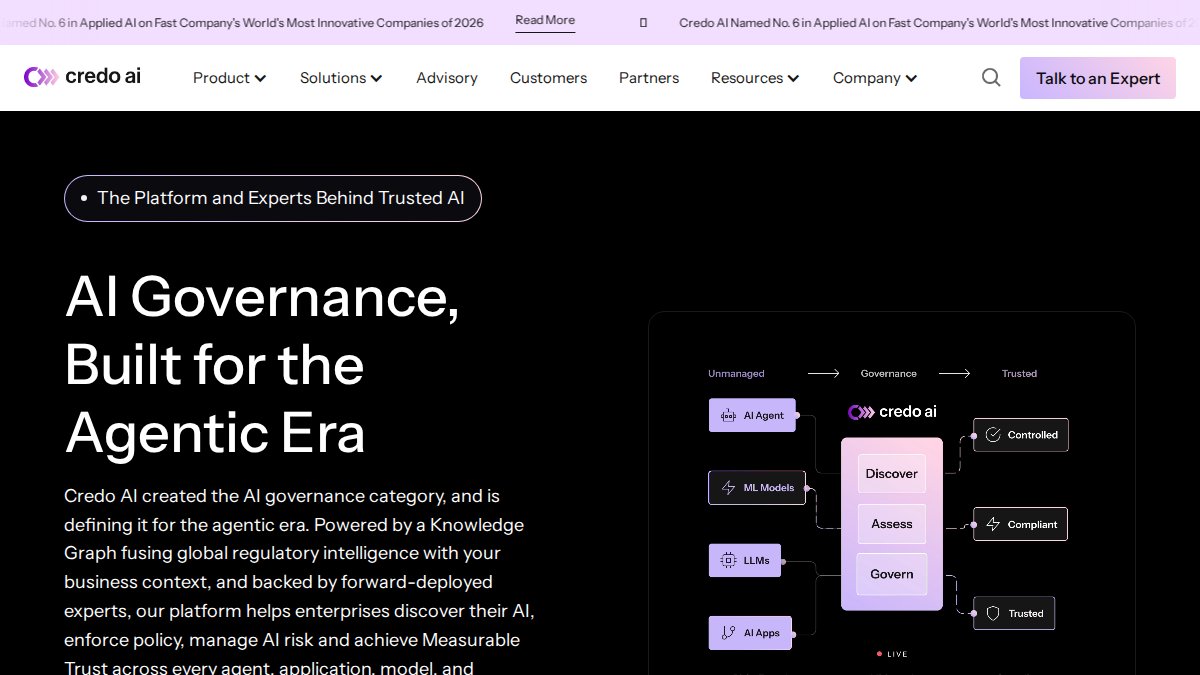
IBM watsonx.governance: Best for Regulated Enterprises
IBM watsonx.governance is built for organizations that must produce documentation on demand. Automated model inventory, bias detection, explainability reports, and policy enforcement are native. The trade-off: it demands dedicated technical oversight, and pricing is quote-based.
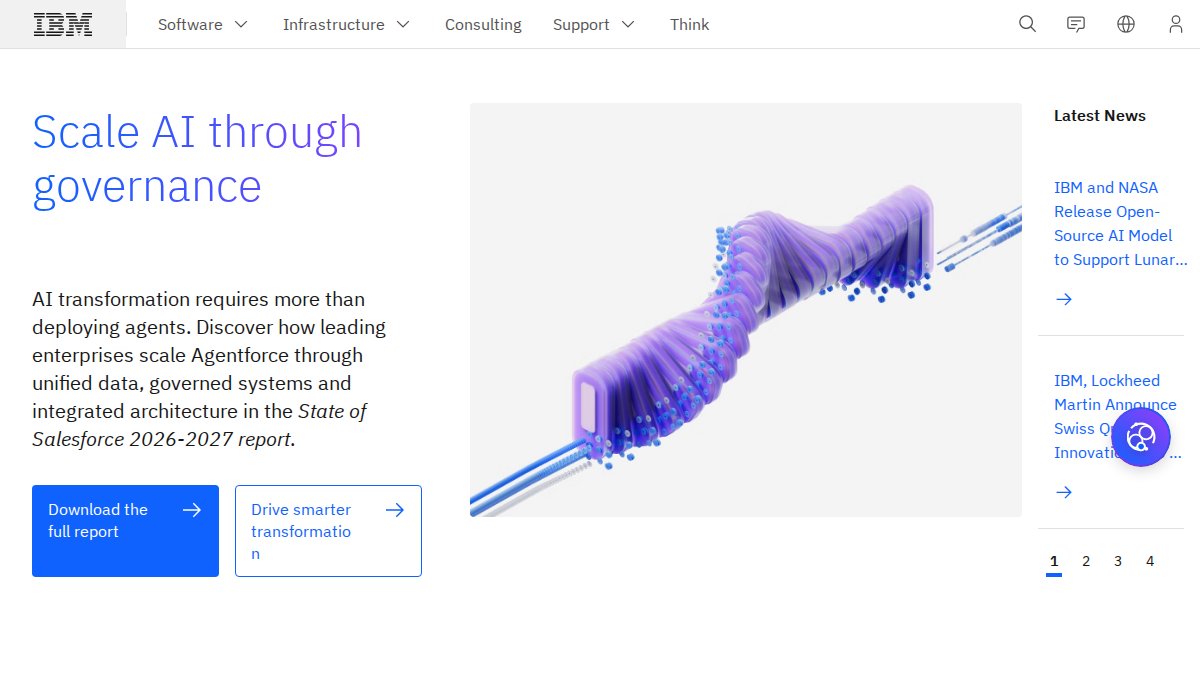
Credo AI: Best for Cross-Functional Policy Alignment
Credo AI's strength is translation: it converts regulatory requirements into policies your legal, product, and engineering teams can all read. Automated risk assessments and stakeholder dashboards make it the cleanest option when the problem is alignment rather than engineering.
Mitigating Algorithmic Bias in Management Workflows
Mitigating algorithmic bias in management means auditing the hiring screeners, performance scores, and promotion recommendations that quietly shape careers. Bias rarely announces itself. It shows up as a model that penalizes career gaps, or a scoring tool trained on a decade of homogeneous promotions.
A practical approach many leadership teams use:
- Inventory every AI tool that touches a people decision
- Identify which attributes the model actually weights
- Test outcomes across demographic groups before deployment
- Assign a named human owner to each model
- Schedule quarterly fairness reviews, not annual ones
Tools for Bias Detection and Fairness Monitoring
Fiddler AI provides real-time monitoring with strong explainability, though non-technical stakeholders face a steep learning curve. Arthur AI tracks fairness across demographic groups and handles LLM monitoring well, at premium pricing. WhyLabs offers guardrails with a free tier, the sensible starting point for teams testing the waters. H2O Model Validation and DataRobot AI Compliance serve regulated industries.
Best Practices for AI-Driven Decision Making
The best practices for AI-driven decision making start with one rule: the human owns the outcome. AI can recommend, rank, and forecast, but should not be the final signature on a termination, a loan denial, or a clinical call.
Three practices separate mature teams from the rest:
- Set decision thresholds in advance. Define what the model can decide alone, what requires review, and what requires executive sign-off.
- Keep a human in the loop for consequential calls. Document who that person is and what they saw.
- Log the reasoning, not just the result. When a decision is challenged, explainability is your defense.
Psychological Safety in AI-Augmented Teams
Psychological safety in AI-augmented teams is the belief that people can question a model's output without career risk.

Why AI Changes the Safety Equation
Traditional psychological safety is about speaking up against a manager or peer.
Concrete Mechanisms Leaders Can Deploy
- Pre-mortems on model outputs. Before a model goes live, run a session where the team's only job is to describe how it will fail. Framing dissent as the assignment removes the career risk.
- A named "red team" rotation. Assign one person per review cycle to argue against the model's recommendation, with the explicit expectation that they will find something. Rotate the role so it never becomes one person's reputation.
- Override logging without penalty. Track how often humans override the model, and treat a healthy override rate as a sign the loop is working, not friction to eliminate.
- Separate the question from the questioner. When a reviewer challenges an output, respond to the substance first. Asking "what would have to be true for this to be wrong?" makes challenge routine rather than personal.
- Post-incident reviews that focus on system design. When a harmful output ships, review the process, who reviewed it, what they saw, what the model surfaced, not the individual who approved it.
How to Tell Whether It's Working
- Reviewers raise concerns about model outputs in writing, not just in side conversations.
- Override rates are non-zero and stable, not trending toward zero.
- The same people who flag issues are still on the team a year later, and still flagging.
- Incident reports surface problems before customers or regulators do.
The Leadership Discipline Behind It
Building this is not a tooling problem.
AI Ethics Audit Checklists for Leadership Teams
An AI ethics audit checklist is a repeatable set of questions your leadership team runs before and after any AI deployment.
The Pre-Deployment Checklist
Run this before any AI system touches a consequential decision, hiring, credit, clinical guidance, performance scoring, or customer eligibility.
The Post-Deployment Checklist
Most audit failures happen after launch, not before.
How to Score and Escalate
- Score each item as Met, Partial, or Not Met. Partial counts as Not Met for escalation purposes.
- Any Not Met on a consequential-decision system triggers a 30-day remediation plan with a named owner and a date.
- Three or more Not Met items across the portfolio escalates to the executive team, not just the AI governance group.
- Any Not Met on bias testing or human review pauses new deployments of that system until resolved.
Making the Audit Stick
Three practices separate audits that change behavior from paperwork:
- Tie the audit to a leadership meeting, not a compliance inbox. If findings are reported to the executive team on a fixed cadence, owners treat them as real.
- Publish the score internally. Teams respond to visibility. A portfolio-level score, even a rough one, creates pressure that a private memo never will.
- Revisit the checklist itself annually. As AI systems change, new models, new vendors, new use cases, the questions that matter change with them. A checklist frozen in 2026 will miss what matters in 2028.
Cross-Cultural Ethical AI Perspectives for Global Leaders
Cross-cultural ethical AI perspectives matter because fairness is not universal.
Conclusion: Leading with Character in the Age of AI
The hardest part of AI leadership isn't the technology.
Frequently Asked Questions
What are the primary ethical risks of using AI in executive decision-making?
The biggest risks include algorithmic bias that skews hiring or promotion decisions, lack of transparency in how AI reaches conclusions, and unclear accountability when AI-driven choices harm stakeholders. Leaders also face data privacy violations and the danger of over-relying on models that cannot explain their reasoning. Addressing these requires governance frameworks, regular bias audits, and keeping humans in the loop for high-stakes calls.
How does the 2026 regulatory landscape impact AI leadership ethics?
Regulations now require many organizations to document how AI systems make decisions, prove fairness in outcomes, and maintain audit trails. Leaders must ensure their AI governance frameworks align with these rules or risk fines and reputational damage. The practical takeaway: build compliance into your AI adoption strategy from day one rather than retrofitting it later.
How can leaders maintain human-centric values while adopting AI tools?
Start by defining which decisions AI can support and which must remain human-led. Use AI for pattern detection, data synthesis, and routine tasks, but keep ethical judgment and final calls with people. Regular check-ins with teams about how AI affects their work build trust and surface concerns early. Character-driven leadership means using AI to amplify human strengths, not replace them.
What is the role of accountability in AI-driven management?
Accountability means a named person owns every AI-influenced decision. When a model recommends a candidate rejection or a resource cut, a human leader must be able to explain the reasoning and take responsibility. This requires clear decision-making authority, documented review processes, and a culture where raising concerns about AI outputs is safe and expected.
How do you mitigate algorithmic bias in leadership workflows?
Run regular bias audits on any AI tool used for hiring, performance reviews, or resource allocation. Test outcomes across demographic groups and compare results to historical baselines. Use appropriate platforms to monitor for drift and flag fairness issues. Pair technical monitoring with diverse review panels that catch problems metrics miss.
AI will keep getting more capable. The leaders who thrive will be the ones whose judgment keeps pace. Book Jim to speak and give your team the character-driven framework they need to lead through it.