
Elevate Leadership Alternatives for Leaders
Table of Contents
- Why Leaders Switch from Elevate Leadership
- Executive Leadership Coaching Programs: Personalized vs. Group Models
- Character-Driven Leadership Training: Beyond Title-Based Development
- Top Elevate Leadership Alternatives Compared
- Personalized vs Group Leadership Coaching: Which Drives Results?
- ROI and Measurable Performance Metrics in Leadership Development
- Implementation Timeline and Onboarding Expectations
- Conclusion
Last Updated: August 22, 2026
Why Leaders Switch from Elevate Leadership
Leaders investing in generic development programs often find themselves frustrated. The workshops feel disconnected from real challenges, checking boxes without addressing core issues: how leaders show up under pressure.
This is where many organizations seek an elevate leadership alternative for leaders. The search typically begins with a specific pain point, emerging leaders lacking presence for promotions, teams disengaged by micromanagement, or character-driven training that never stuck because it felt abstract.
The best elevate leadership alternative addresses what generic programs miss: the link between identity, behavior, and measurable business outcomes. Leaders need clarity on who they are as a leader, permission to lead differently, and practical strategies for high-stakes moments.
According to research from the Center for Creative Leadership, leaders who engage in personalized development show significantly higher engagement and retention outcomes compared to those in one-size-fits-all programs. The difference comes down to relevance.
Executive Leadership Coaching Programs: Personalized vs. Group Models
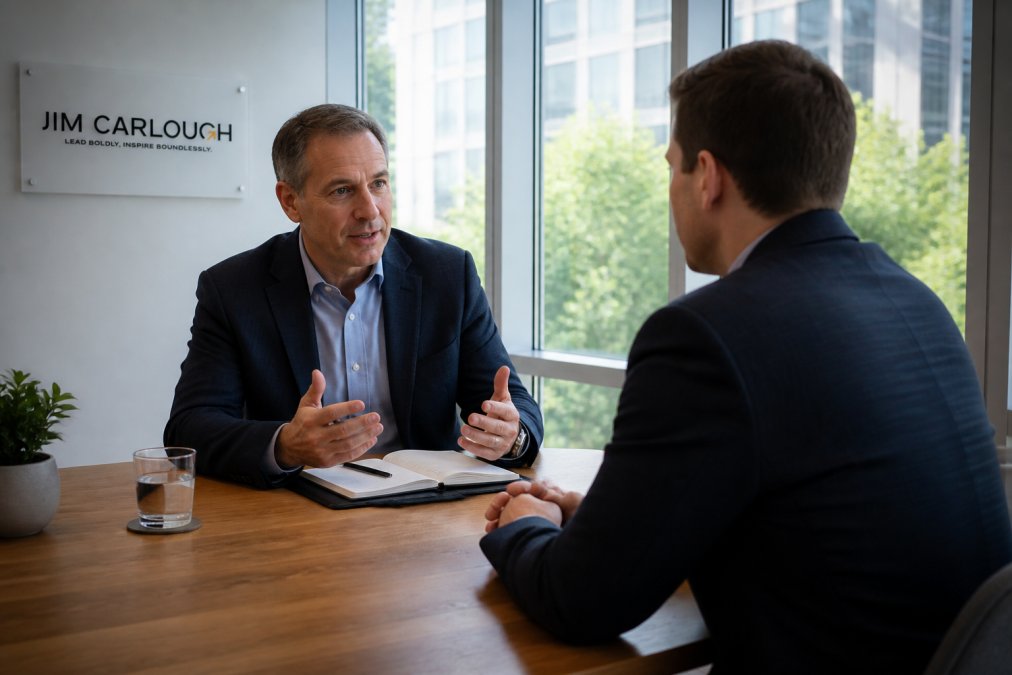
Personalized coaching creates space for vulnerability and specificity that group settings cannot replicate. A coach working one-on-one identifies the exact moment a leader defaults to old patterns and builds targeted strategies around it.
Group-based programs excel at creating peer learning and shared language across an organization. Multiple leaders moving through the same curriculum develop common frameworks and hold each other accountable. The trade-off is depth: group programs necessarily generalize, meaning some leaders get exactly what they need while others sit through irrelevant content.
The most effective organizations layer both approaches. A leader might start with group training to establish baseline skills and shared vocabulary, then move into personalized coaching to address identity gaps and behavioral patterns. This hybrid approach costs more upfront but delivers measurable results.
Personalized coaching typically requires 6-12 months to show meaningful behavior change (peer-reviewed research). Group programs often show faster initial engagement but require reinforcement to create lasting shifts.
Character-Driven Leadership Training: Beyond Title-Based Development
Most leadership training assumes that a title makes someone a leader. A person gets promoted to VP and is suddenly expected to think and act like one. But the person inside that role is still the same person who got promoted, their insecurities and default patterns under stress remain unchanged.
Character-driven leadership training flips this. Instead of starting with the role, it starts with the person. Who are you as a leader when nobody is watching? What do you actually believe about people and their potential? When frustrated or scared, what do you default to? These questions shape every decision a leader makes.
This approach recognizes that sustainable leadership change happens at the identity level, not the skill level. A leader can learn new communication techniques and still default to command-and-control under pressure if their fundamental belief is that people need to be directed. Character-driven development addresses that belief first.
Organizations implementing character-driven frameworks report higher retention of emerging leaders and stronger succession pipelines. When leaders develop clarity about who they are and what they stand for, they become more intentional about developing others.

Top Elevate Leadership Alternatives Compared
When evaluating an elevate leadership alternative for leaders, you're assessing three dimensions: the depth of personalization, the focus on character versus competency, and the measurable business outcomes the program delivers.
Jim Carlough: Identity-Centered Leadership Coaching
Jim Carlough brings 30+ years of enterprise transformation experience to leadership development, focusing on the leader's identity and how it shapes every decision they make. His approach centers on the six foundational pillars of leadership, moving beyond title-based thinking into character-driven action.
Rather than teaching leaders how to act like a leader, Carlough's work helps them understand who they actually are as a leader and what that means for how they show up with their teams. This distinction matters enormously for sustainable behavior change.
The engagement typically includes one-on-one coaching combined with keynote speaking and developmental programs designed for organizations navigating cultural transformation. For leaders struggling with presence, influence, or the gap between their title and how people perceive them, this addresses the root issue directly.
Pros:
- Deep expertise in enterprise transformation and leadership identity
- Character-driven methodology that addresses root causes
- Customized approach tailored to individual leader challenges
Cons:
- Personalized coaching requires significant time commitment from leaders
- Investment scales with scope and depth of engagement
FranklinCovey Leadership Development Solutions
FranklinCovey offers comprehensive leadership development solutions grounded in 40 years of research, focusing on building high-trust leaders, teams, and cultures. Their programs address systemic issues that prevent organizations from achieving breakthrough results.
The strength lies in their research foundation and ability to customize programs for organizations at scale. They offer solutions for leaders at every level, from first-time managers to C-suite executives. Content is practical and immediately applicable.
For organizations looking to build a unified leadership culture across multiple departments or locations, FranklinCovey provides the infrastructure and expertise to do it.
Pros:
- Extensive research backing every program
- Customizable for organizational scale and specific challenges
- Strong facilitator network and training quality
- Proven results in building high-trust cultures
Cons:
- Less personalized than one-on-one coaching
- Organizational implementation requires sustained commitment
Center for Creative Leadership (CCL)
The Center for Creative Leadership stands out for its 50+ years of research-driven leadership development and global credibility. They offer open enrollment programs, custom programs, and leadership coaching.
CCL's approach emphasizes evidence-based development through 360-degree assessments and applied learning modules. Cohort-based workshops create peer learning communities where leaders from different organizations solve problems together.
For mid-to-large enterprises seeking structured, academically rigorous leadership programs with global recognition, CCL delivers credibility and depth.
Pros:
- Immersive, research-driven programs with academic rigor
- Global recognition and credibility
- Both virtual and face-to-face formats available
- Strong peer learning component
Cons:
- Cohort-based model may limit personalization
- Higher cost for comprehensive programs
Dale Carnegie Training
Dale Carnegie Training focuses on communication, human relations, and leadership skills applied in real-world settings. Their "Leadership Training for Results" program emphasizes essential leadership competencies through interactive, small-group training.
Leaders leave with concrete skills they can use immediately, making ROI feel tangible. This approach works well for organizations needing foundational leadership skill development or training emerging leaders.
Pros:
- Practical, immediately applicable skills
- Small-group format allows for personalized feedback
- Accessible pricing model
- Strong emphasis on communication and human relations
Cons:
- Less focus on identity or character development
- May feel surface-level for experienced executives
Leading with Character
Leading with Character offers a free, self-paced 30-day online course developed in collaboration with Legatum, the University of Oxford, and Harvard University. The program focuses on character qualities and their role in leadership effectiveness.
This is the most accessible option. There's no cost barrier, no time commitment beyond what a leader chooses to invest, and the curriculum is grounded in modern research. The self-paced format means leaders can engage when it fits their schedule.
The trade-off is the lack of personalization and organizational integration. This works well for individual leaders seeking character development or organizations introducing character-driven thinking without large investment.
Pros:
- Completely free and accessible
- Focuses on foundational character principles
- Developed by leading academic institutions
- Self-paced, flexible format
Cons:
- No personalized coaching or feedback
- Limited organizational integration
- Self-directed learning requires high intrinsic motivation
Personalized vs Group Leadership Coaching: Which Drives Results?
Personalized approaches drive deeper behavior change, while group programs create cultural alignment and peer accountability. The question isn't which is better, it's which problem you're solving.
Personalized coaching works best for leaders with specific, high-stakes challenges, a VP who micromanages, an emerging leader lacking executive presence, or a newly promoted manager struggling to transition from individual contributor to leader.
Group programs excel at building shared language and culture across an organization. When your challenge is building unified thinking about engagement and development, a cohort-based program creates momentum that individual coaching cannot match.
The most sophisticated organizations layer both. They use group programs to establish baseline competency and shared vocabulary, then deploy personalized coaching for leaders facing specific challenges or high-potential individuals being prepared for critical roles.
One critical factor: accountability structures matter enormously. A leader attending a group program with no follow-up accountability often reverts to old patterns within weeks. A leader in personalized coaching with clear metrics and check-ins sustains behavior change.
ROI and Measurable Performance Metrics in Leadership Development
Organizations invest significant budget in leadership development but struggle to articulate what success looks like or how they'll measure it.
Leadership development operates on a longer timeline than most business initiatives. A sales training program shows ROI in 90 days. A leadership development program typically requires 6-12 months to show measurable behavior change and 12-18 months to show impact on team engagement or retention (ccl.org).
Organizations measuring leadership development success typically track:
- Team engagement scores: Do the leader's direct reports feel more engaged after development?
- Retention of high performers: Are talented people staying or leaving?
- Succession readiness: How many of a leader's direct reports are ready for promotion?
- Internal promotion rate: What percentage of open leadership roles are filled from within?
- Time to productivity for promoted leaders: How quickly do internally promoted leaders perform at the new level?
The mistake many organizations make is measuring leadership development like training, tracking completion rates or satisfaction scores. These metrics tell you whether people showed up and liked the experience, not whether the leader actually changed or whether that change drove business results.
The most rigorous approach is establishing baseline metrics before the program begins, then measuring the same metrics 6 and 12 months after.
Implementation Timeline and Onboarding Expectations
Understanding the realistic timeline for leadership development helps set expectations and prevents abandoning a program before it has time to work.
Most personalized coaching engagements follow a similar arc. The first month focuses on assessment and relationship building. Months two through four show the first visible behavior changes. Months five through twelve are where sustained change happens as new patterns become more automatic.
Group programs typically compress this timeline. A cohort-based program might span 8-12 weeks with intensive workshops, then ongoing learning communities for 6 months. The accelerated format works well for building shared language quickly but requires stronger follow-up structures.
Personalized coaching typically requires 60-90 minute initial assessments, then monthly or bi-weekly sessions. The leader needs to be prepared to be vulnerable about their challenges. Group programs require less individual preparation but more organizational coordination.
One critical success factor: executive sponsorship matters. When a leader's boss or CHRO is actively invested in the program and asking about progress, completion rates and behavior change both improve significantly.
Conclusion
The shift from generic leadership programs to character-driven, personalized alternatives reflects a deeper truth: leaders need clarity on who they are as a leader and permission to lead authentically. That clarity, combined with practical strategies for navigating real situations, drives the behavior change that transforms teams.
Jim Carlough's approach addresses this directly through identity-centered coaching focused on the six foundational pillars of leadership. His 30+ years of enterprise transformation experience and focus on building confidence, clarity, and influence through human connection make him the strongest choice for leaders and organizations ready to move beyond titles. BOOK JIM TO SPEAK to explore how character-driven leadership development can transform your organization's leadership capability and culture.
Frequently Asked Questions
Q: What makes character-driven leadership training different from standard corporate training?
A: Character-driven leadership training focuses on developing the person behind the title, emphasizing identity, values, and authentic influence rather than just competencies or tactics. Standard corporate training often teaches management skills and processes. Character-based approaches, like those offered by Jim Carlough and Leading with Character, help leaders understand their foundational qualities (courage, hope, empathy) and how those shape their effectiveness. This distinction matters because leaders who develop character-driven presence create stronger team engagement and longer-term retention. The difference shows up in how leaders show up in difficult conversations and how teams respond to their authenticity.
Q: How do I know if personalized vs group leadership coaching will deliver better ROI for my organization?
A: Personalized coaching works best when you need behavior change in specific leaders or when leaders face unique challenges (micromanagement, presence gaps, succession readiness). Group programs build systemic capability across teams and are more cost-effective per person. For ROI, consider: Does your problem affect one leader or many? Do you need measurable shifts in retention, engagement, or promotion readiness? Personalized coaching typically shows faster results in individual leader transformation but costs more per person. Group programs create shared language and culture shift but require longer implementation. Most enterprises use both: group programs for broad capability building and personalized coaching for high-potential leaders or those blocking team performance.
Q: What should I expect in terms of timeline and cost commitment for executive leadership coaching programs?
A: Most executive leadership coaching programs run 6-12 months, with sessions ranging from monthly to weekly depending on intensity. Group workshops typically last 2-5 days or span several weeks with virtual modules. Onboarding usually includes an initial assessment (360-degree feedback, leadership assessment, or coaching discovery) before coaching or training begins. Costs vary widely by vendor and model: group programs may cost less per participant but require organizational alignment; personalized coaching is higher per person but more flexible. Jim Carlough and other character-focused coaches can discuss pricing and timeline based on your specific leadership challenges. Most vendors require a commitment period to see measurable behavior change and team impact.
Q: Can leadership development programs address industry-specific challenges like healthcare compliance and culture?
A: Yes, but not all programs specialize in healthcare. FranklinCovey and Center for Creative Leadership offer customizable programs that can address compliance, culture, and change management specific to healthcare environments. Jim Carlough's enterprise transformation experience includes working with organizations navigating complex cultural and operational challenges. When evaluating alternatives, ask whether the vendor has healthcare case studies, understands regulatory constraints, and can tailor content to your specific challenges (succession planning, team resilience under pressure, building trust in high-stakes environments). Generic programs may miss the unique pressures healthcare leaders face, so vendor experience in your industry matters for relevance and credibility.
This article was written using GrandRanker