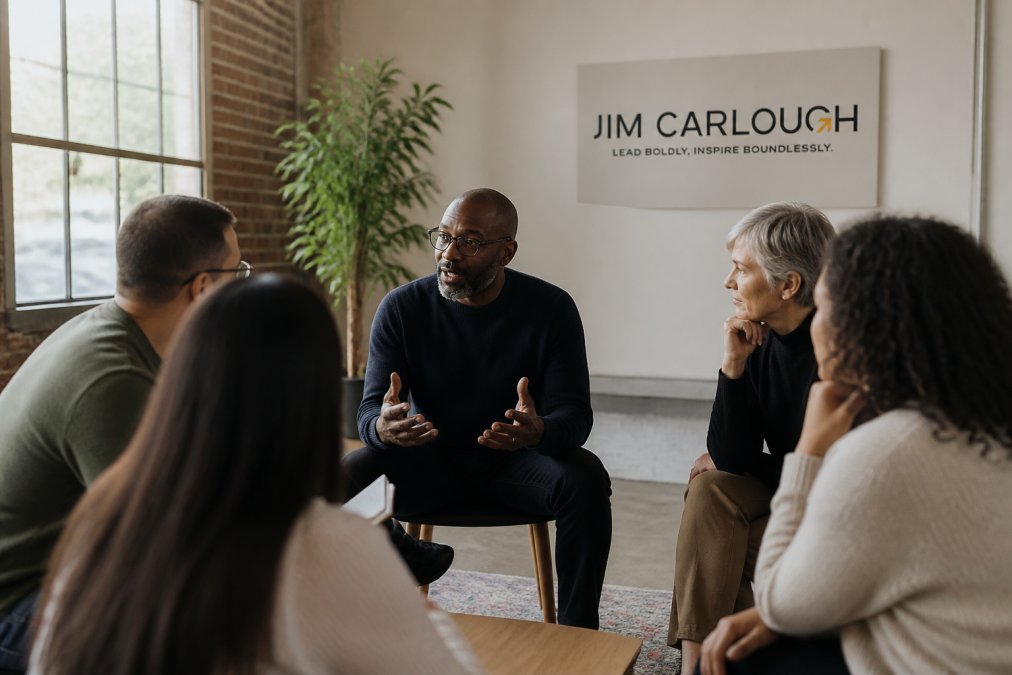
Alternatives to Traditional Corporate Leadership Training
Table of Contents
- Why Traditional Leadership Training Falls Short
- Peer Advisory Groups and Peer-to-Peer Mentoring
- Executive Coaching for Enterprise Leaders
- The 70-20-10 Leadership Development Model in Practice
- Action Learning and Experiential Development
- Digital Platforms, Micro-Learning, and Blended Approaches
- Leadership Development ROI Metrics That Matter
- Frequently Asked Questions
Last Updated: September 16, 2026
Why Traditional Leadership Training Falls Short
Traditional corporate leadership training delivers generic content to large groups over a fixed period, and it consistently fails to change how leaders behave on the job, which is why so many organizations now explore alternatives to traditional corporate leadership training. It treats leadership as knowledge to be transferred rather than a practice to be developed.
Peer Advisory Groups and Peer-to-Peer Mentoring
Peer advisory groups are small, facilitated cohorts of leaders at similar levels who meet regularly to solve real problems together. They outperform classroom training because the pressure to follow through comes from people you respect. A common approach: a monthly half-day session with six to ten members, each bringing one live challenge.

Psychological Safety in Peer-Led Groups
Psychological safety is the shared belief that you can admit a mistake or ask a naive question without penalty. Without it, peer groups collapse into performance theater: members present polished updates instead of real problems, and the format loses its advantage.
Executive Coaching for Enterprise Leaders
Executive coaching is a one-to-one relationship in which a trained coach works with a leader over several months on specific behavioral goals. It is the most direct alternative to group training because the agenda is entirely yours.
The 70-20-10 Leadership Development Model in Practice
The 70-20-10 leadership development model holds that roughly 70 percent of development comes from challenging on-the-job experience, 20 percent from relationships and coaching, and 10 percent from formal courses (The 70-20-10 Model for Learning and Development). Treating those figures as a budget formula misses the point. They describe where learning actually sticks.
The Model Is a Diagnostic, Not a Budget
If you spend 70 percent of your learning budget on stretch assignments, you have misread the model. The percentages describe the source of development, not spending. A stretch assignment often costs nothing but carries most of the learning; a workshop can consume most of the budget and deliver the smallest share of change.
| Development Layer | Share | What It Looks Like | Typical Cadence | How to Tell It Worked |
|---|---|---|---|---|
| On-the-job experience | ~70% | Stretch assignment, leading a turnaround, owning a budget | Continuous | The leader handled a harder decision six months later without help |
| Relationships and coaching | ~20% | Executive coaching, peer advisory group, mentor | Monthly | The leader's direct reports report a behavior change |
| Formal coursework | ~10% | Workshops, university programs, certifications | Quarterly or annual | The leader applied one specific tool to a live problem |
Building the 70 Percent on Purpose
The 70 percent does not happen by accident. Leaders default to work they are already good at unless someone assigns the stretch. A practical pattern:
- Name the gap in behavioral terms. "Needs to run harder conversations with underperformers," not "needs executive presence."
- Assign a live challenge that requires the gap. Put the leader in front of the conversation, not beside it.
- Attach a relationship. A mentor or coach who debriefs the experience weekly.
- Add the 10 percent just in time. A short module or workshop on the specific skill, delivered when the leader is already facing the challenge.
Measuring Long-Term Behavior Change
The metric most organizations skip is the one that matters. Completion rates and satisfaction scores tell you a program happened, not that a leader changed.
A workable measurement plan for a 70-20-10 program:
- Baseline at day zero. Assess the target behavior with a 360 or a structured manager observation.
- Check at month three. Has the leader's direct reports noticed a difference? Ask them, not the leader.
- Check at month six. Has the leader taken on a harder version of the same challenge without prompting?
- Check at month twelve. Has the behavior held under pressure, and has it spread to the leader's own team?
The SME Version of the Model
Small and midsize organizations can run the full 70-20-10 loop without an enterprise budget. The constraint is cash, not method.
- The 70: Deliberately hand a high-potential employee a project above their current level, with a clear behavioral goal attached.
- The 20: Facilitate your own monthly peer group of six to eight managers. The only cost is time. Nonprofit mentoring networks can pair small business leaders with experienced volunteer executives at no cost.
- The 10: Use entry-tier learning subscriptions or free tiers for pilot programs. Buy one module at a time, tied to a live challenge, instead of a full library.
Action Learning and Experiential Development
Action learning is a structured method in which a small group works on a real, unresolved organizational problem and learns by acting on it rather than discussing it. Unlike case studies, the problem belongs to the organization, and the group's recommendations get implemented.
Digital Platforms, Micro-Learning, and Blended Approaches
Digital platforms and micro-learning replace the multi-day workshop with short, mobile-friendly modules leaders complete in the flow of work; blended learning combines those modules with live coaching or peer sessions. The technology is rarely the hard part, the design is. The useful question is what separates a platform that changes behavior from one that just logs completions.
What Actually Belongs in a Platform
A leadership platform is not a course library. It is the delivery and tracking layer for a development system. Before you evaluate a single vendor, decide which of these four jobs the platform must do:
- Deliver micro-content. Five-to-ten-minute modules, video or text, that a manager can finish between meetings.
- Prompt practice. Nudges, reflection questions, or a scheduled peer check-in that forces application, not just consumption.
- Capture behavioral data. Self-assessments, 360 feedback, and manager observations tied to a named skill, not a completion percentage.
- Connect people. Discussion threads, cohort channels, or live session scheduling so the learning is social.
Micro-Learning Design Rules That Hold Up
Micro-learning works when each module maps to one behavior and one moment. A module titled "Delegation" fails. One titled "How to hand off a project without taking it back" works, because the leader can use it the same afternoon.
A common pattern among teams that get results:
- One behavior per module.
- One scenario the learner recognizes from their own week.
- One action to try before the next module unlocks.
- One reflection prompt that feeds the next coaching or peer session.
Blended Beats Self-Paced Alone
Self-paced modules alone rarely change behavior: leaders who only consume content report awareness, not change. Pair the modules with one of these and the effect compounds:
- A peer cohort that meets monthly to debrief what worked.
- A coach who reviews the learner's reflection notes before each session.
- A manager who observes the target behavior and gives feedback.
What Platform Pricing Actually Depends On
Corporate learning platforms and LMSs vary widely in cost and complexity, and published per-seat rates are almost never the real price. What moves the number:
- Seat count and active-user definition. Some vendors count every employee; others count only monthly active learners.
- Contract length. Annual commitments typically price lower per seat than month-to-month.
- Content licensing. Off-the-shelf libraries are cheaper than custom or branded content.
- Implementation and integration. Single sign-on, HRIS sync, and reporting setup are often billed separately.
- Live facilitation. Blended programs with human coaches or facilitators cost materially more than self-paced only.
The Low-Cost Path for Small Teams
You do not need an enterprise platform to run a blended program. A small or midsize organization can build the same loop with tools it already pays for:
- A shared document for the monthly behavior focus and reflection prompts.
- A recurring calendar block for the peer cohort.
- A free or entry-tier video library for the micro-content layer.
- A simple spreadsheet to track the behavioral assessment at day zero, ninety, and one year.
guidance on evaluating learning technology and data privacy obligations
Leadership Development ROI Metrics That Matter
Leadership development ROI is the measurable change in business outcomes attributable to a development program, expressed against its total cost. The trap is measuring what is easy instead of what matters.
Track these instead of satisfaction scores:
- Retention of high potentials. Compare voluntary turnover among program participants against a matched group.
- Internal promotion rate. Are participants moving into bigger roles faster than non-participants?
- Team engagement scores. Measure the participants' direct reports, not the participants themselves.
- Behavioral change over time. Assess the same skills at month three, month six, and month twelve. A single post-program survey tells you nothing about whether anything stuck.
Budget-Friendly Options for SMEs
Small and midsize organizations can run credible leadership development without an enterprise budget. The constraint is cash, not method.
- Free executive mentoring. Nonprofit mentoring networks pair small business leaders with experienced volunteer executives at no cost.
- Internal peer groups. Facilitate your own monthly advisory group with six to eight managers. The only cost is time.
- Stretch assignments. Deliberately hand a high-potential employee a project above their current level with a mentor attached.
- Low-cost learning platforms. Entry-level learning management subscriptions start at modest monthly rates for small teams, and free tiers exist for pilot programs.
Frequently Asked Questions
What are the most effective alternatives to traditional leadership workshops?
The strongest alternatives replace passive lectures with active practice. Peer advisory groups like Vistage let leaders solve real problems together. Executive coaching offers one-on-one accountability. Action learning puts teams on live business challenges. The 70-20-10 leadership development model formalizes this by prioritizing on-the-job experience (70%), relationships (20%), and formal courses (10%). Blended programs that combine several methods tend to produce the most durable behavior change.
How does the 70-20-10 model improve leadership development outcomes?
The 70-20-10 model shifts the bulk of development to real work. Roughly 70% comes from challenging assignments, 20% from coaching and peer feedback, and 10% from structured courses. This mirrors how adults actually build skills. When organizations apply it, they stop treating training as an event and start treating it as a continuous process. That leads to better knowledge retention, faster skill acquisition, and measurable performance improvement because leaders practice new behaviors in context, not in a classroom.
What are the benefits of executive coaching over group leadership seminars?
Executive coaching for enterprise leaders is personalized. A coach observes how you actually show up in meetings, gives direct feedback, and holds you accountable between sessions. Seminars deliver information to a room; coaching changes behavior in the room where you work. Coaching also addresses the identity and confidence gaps that group training often misses. For leaders who need to shift how they influence, delegate, or handle conflict, coaching usually produces faster, more visible results.
How can organizations measure the ROI of non-traditional leadership development?
Start with leadership development ROI metrics tied to business outcomes, not attendance. Track employee engagement scores, voluntary turnover, internal promotion rates, and succession pipeline readiness before and after a program. Use 360-degree feedback to measure behavior change over six to twelve months. For peer groups and coaching, measure the time between problem identification and resolution. When CFOs see retention and promotion numbers move, the investment becomes defensible. Pair quantitative data with qualitative stories from participants to show context.
Why is character-driven leadership becoming a preferred alternative to standard training?
Standard training often focuses on skills like delegation or feedback, but leaders still struggle because they lack clarity about who they are as leaders. Character-driven leadership starts with identity, values, and human connection. It builds the confidence and presence that make skills stick. In an age of AI and automation, empathy, judgment, and trust are the differentiators. Programs that develop character help leaders earn followership rather than rely on title. That shift improves team engagement and makes succession planning more credible.