
BlOG
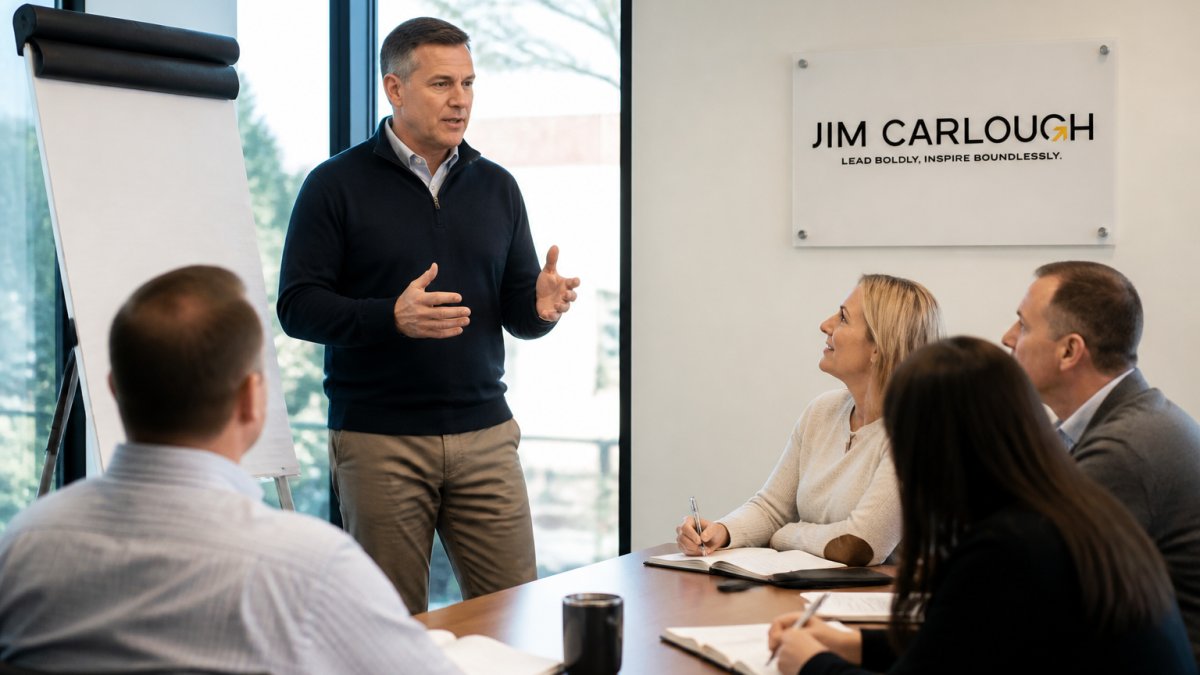
Leadership Training Curriculum for Corporate Managers
Last Updated: October 24, 2026
Quick Summary
A leadership training curriculum for corporate managers sequences skill-building logically, ensures foundational concepts reach every manager, and creates accountability for applying new behaviors. Most effective curricula span 12-24 months with monthly sessions, peer cohorts, and coaching to embed behavior change through practice and reinforcement.
- Organizations with formal leadership development programs see measurable improvements in employee engagement and retention compared to those without structured approaches.
- Effective curricula rest on six pillars: self-awareness, intentional communication, emotional intelligence, strategic thinking, talent development, and executive presence.
- Segment your curriculum by manager level: emerging managers need foundational execution, mid-level managers need strategic thinking, and senior leaders need organizational impact focus.
- Create accountability for application through peer accountability, manager accountability, and self-assessment to prevent training from being forgotten.
- Start with a pilot cohort of 15-30 managers rather than rolling out organization-wide, then build internal facilitator capability for sustainability.
Table of Contents
- Why a Structured Leadership Training Curriculum Matters
- The Six Foundational Pillars of Leadership Development
- Leadership Training Activities for Managers at Every Level
- Building Your Leadership Development Plan Template
- Leadership Training Duration and Sequencing
- Leadership Training Best Practices and Common Pitfalls
- Measuring Training Impact on Manager and Team Performance
- Implementing Your Curriculum: Next Steps for Your Organization
- Frequently Asked Questions
Why a Structured Leadership Training Curriculum Matters
Building a leadership training curriculum for corporate managers is not optional for organizations serious about retention and performance. Without structure, leadership development becomes reactive, a few scattered workshops, an occasional conference, maybe a book club that fizzles after three months.
A deliberate curriculum changes that equation. It sequences skill-building in a logical order, ensures every manager touches the same foundational concepts, and creates accountability for application. According to research from the Center for Creative Leadership, organizations with formal leadership development programs see measurable improvements in employee engagement and retention compared to those without structured approaches.
The stakes are particularly high in healthcare, technology, and mid-to-large enterprises where leadership transitions happen frequently and the cost of a failed promotion is steep. When you have a clear pathway, what emerging managers need to learn first, what mid-level leaders must master, what executive presence requires, you reduce the guesswork and accelerate time-to-competence.
The Six Foundational Pillars of Leadership Development
Effective leadership training curriculum for corporate managers rests on six pillars that move beyond generic soft skills into the actual identity and capability required to lead. These pillars form the backbone of how we approach leadership development, and they're designed to work together rather than in isolation.
Self-Awareness and Identity: Leaders who don't understand their own default behaviors, blind spots, and impact on others operate from reaction, not intention.
Intentional Communication: Most managers communicate poorly not because they lack intelligence but because they haven't practiced saying difficult things clearly.
Strategic Thinking and Decision-Making: Emerging managers often get stuck in tactical execution. Mid-level leaders need to think two moves ahead, connect their work to organizational strategy, and make decisions with incomplete information.
Talent Development and Delegation: Leaders multiply their impact through others. This pillar teaches managers how to identify high-potential employees, create development plans, delegate effectively, and build succession pipelines.
Influence and Executive Presence: Many capable managers plateau because they lack presence, the ability to command attention, build credibility quickly, and influence without authority.
These six pillars form the foundation for Jim Carlough's bestselling framework on effective leadership, which provides the conceptual architecture for everything that follows in your curriculum.
Leadership Training Activities for Managers at Every Level
Different career stages require different emphases. Explore specific leadership training programs tailored to different manager levels, providing concrete examples of activities discussed in the article. A first-time manager needs to learn how to have a one-on-one.
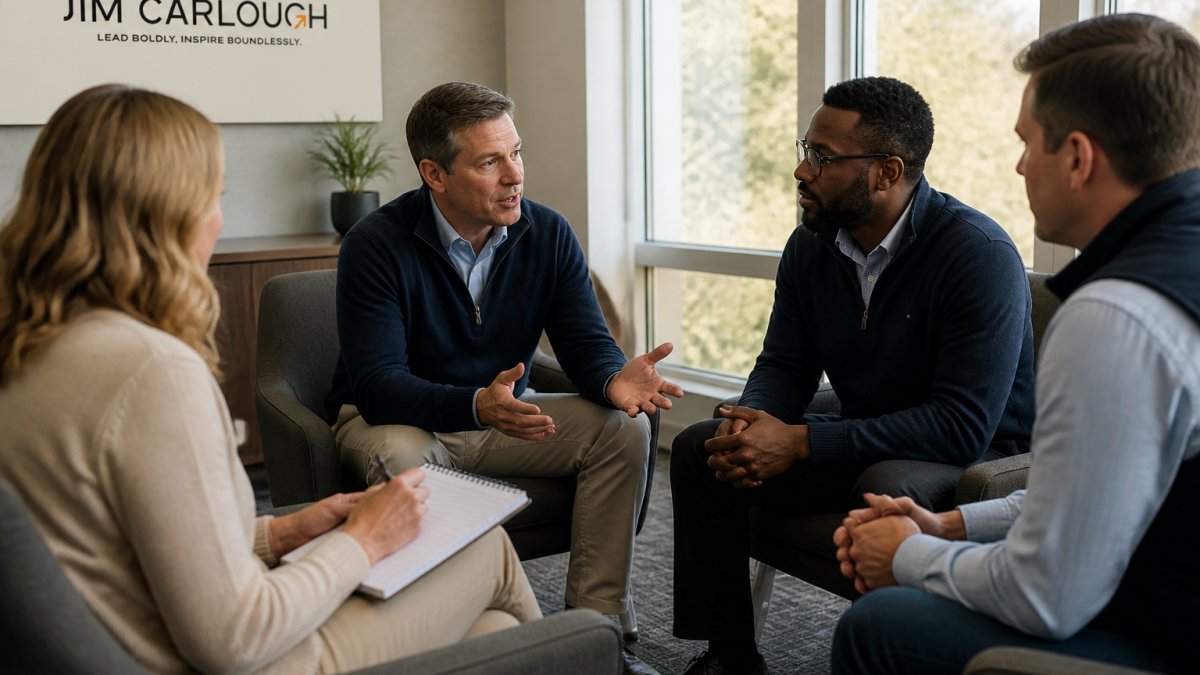
For Emerging Managers (first 18 months in role): Focus on foundational execution and team dynamics. These managers need to move from individual contributor to leader of a small team.
For Mid-Level Managers (2-5 years in leadership): This is where strategic thinking and influence become critical. Activities should include: cross-functional project leadership, exposure to finance and business metrics, leadership coaching focused on presence and communication, and rotational assignments that broaden perspective. Many organizations skip this level and pay for it later when mid-level leaders plateau or leave.
For Senior Leaders and Directors: The focus shifts to organizational impact, succession planning, and culture-setting. Activities include: executive coaching with external coaches, peer advisory groups, strategic planning sessions, and visible participation in organizational transformation initiatives.
One common mistake is treating all managers the same. A curriculum that works for emerging leaders will bore directors and frustrate executives. Conversely, activities designed for senior leaders will overwhelm a first-time manager.
Leadership development priorities shift significantly based on a manager's career stage and tenure.
| Manager Level | Tenure | Core Focus | Key Activities |
|---|---|---|---|
| Emerging Managers | First 18 months | Foundational execution and team dynamics | One-on-one coaching, peer learning cohorts, role-playing conversations |
| Mid-Level Managers | 2-5 years | Strategic thinking and influence | Cross-functional projects, finance exposure, leadership coaching, rotational assignments |
| Senior Leaders and Directors | 5+ years | Organizational impact and succession | Executive coaching, peer advisory groups, strategic planning, transformation initiatives |
Building Your Leadership Development Plan Template
A leadership development plan template gives managers and their supervisors a shared language for what development looks like. It moves from vague aspiration ("I want to be a better leader") to specific, observable skill-building.
The most effective templates also include a behavioral commitment: what will the manager actually do differently, and by when? "Improve communication" is too vague. "In team meetings, I will ask for input from at least three people before sharing my opinion, starting next week" is actionable.
Learn how to compare coaching versus training approaches to decide which components fit your plan. Many organizations use a blend: formal training for foundational skills, coaching for application and accountability, and peer learning for reinforcement.
The template should be simple enough that managers actually use it, not so detailed that it becomes administrative burden. One page front-and-back is ideal. Update it quarterly, not annually, development moves faster when you check progress frequently.
Leadership Training Duration and Sequencing
The architecture of your curriculum matters as much as the content. How long should it take? What should come first?
Most effective corporate leadership training curriculum for corporate managers spans 12-24 months for a full cycle, not because managers need that long to learn, but because behavior change requires practice, feedback, and reinforcement over time. A three-day offsite teaches concepts.
Sequencing follows a logical progression: self-awareness before communication (you can't communicate intentionally if you don't understand your default patterns), foundational skills before advanced ones, and individual development before leading others through change.
A typical 18-month curriculum might look like: Months 1-3 focus on self-awareness and foundational communication. Months 4-9 layer in emotional intelligence, decision-making, and talent development. Months 10-18 focus on strategic thinking, influence, and leading through change. Each phase builds on the previous one.
Watch out: organizations often compress timelines because budget or urgency pushes them to "get it done faster." Compressed curricula show short-term engagement but rarely stick. Behavior change requires repetition and real-world application.
Leadership Training Best Practices and Common Pitfalls
Several patterns emerge across organizations that get this right versus those that struggle.
Best Practice: Create accountability for application. The single biggest waste is training that never transfers to the job. Managers attend, enjoy the experience, then return to old patterns because no one is watching.
Best Practice: Mix formats. Classroom learning, coaching, peer cohorts, digital resources, and on-the-job practice all serve different purposes. A mix keeps engagement high and reaches different learning styles. Some managers learn best in group discussion.
Common Pitfall: Treating leadership development as a one-time event. A three-day workshop is a starting point, not a curriculum. Managers need ongoing reinforcement, new challenges, and continued support. The best organizations treat development as continuous, not episodic.
Common Pitfall: Ignoring the role of the manager's manager. A manager's development accelerates dramatically if their own boss is invested and asking about progress. If the supervisor sees development as HR's job, it won't stick.
Measuring Training Impact on Manager and Team Performance
You can't improve what you don't measure. Yet many organizations invest heavily in leadership development and never track whether it's working.
Start with leading indicators: Did managers complete the training? Are they applying what they learned? Measure this through 360-degree feedback at the start and 6-12 months in, manager self-assessment, and supervisor observations.
Then track lagging indicators: Does the team's engagement score improve? Is retention of high-potential employees better? Do promoted managers succeed in their new roles? Does the organization have a stronger bench of ready-now leaders?
Explore a data-driven framework for measuring ROI of executive coaching, which provides a structured approach to quantifying development impact in terms your CFO will understand.
Many organizations find that the ROI calculation is straightforward: if leadership development reduces unwanted turnover of high-potential employees by even one person per year, it pays for itself. If it accelerates time-to-competence for new managers by three months, that's measurable productivity gain.
Implementing Your Curriculum: Next Steps for Your Organization
Building a leadership training curriculum for corporate managers requires intentional design, executive sponsorship, and sustained commitment. Here's how to start.
Step 1: Define your leadership philosophy. Before you design anything, answer this: What does good leadership look like in your organization? What values matter?
Step 2: Assess current capability. Where are your managers now? What skills are strongest? Where are the gaps?
Step 3: Start with a pilot. Launch your curriculum with a cohort of 15-30 managers, not the entire organization.
Step 4: Build internal capability. Invest in training internal facilitators and coaches rather than relying entirely on external consultants. This builds sustainability and ownership.
Step 5: Secure executive sponsorship. The CEO or CHRO must visibly support the curriculum. Managers notice whether their boss thinks this matters. Executive sponsorship signals priority and removes barriers.
Discover a proven framework for building a leadership pipeline, which provides the structural approach to scaling your curriculum across the organization over time.
Frequently Asked Questions
What should a leadership training curriculum for corporate managers include?
A strong leadership training curriculum covers core competencies: communication, decision-making, emotional intelligence, team engagement, performance management, and strategic thinking. It should address role-specific challenges (frontline leaders face different pressures than mid-level managers), include practical coaching and reinforcement, and build in mechanisms to measure whether managers actually apply what they learn on the job. Character-driven leadership, developing authentic presence and influence, increasingly anchors modern programs.
How long should leadership training for managers last?
Most effective programs span 6 to 12 months, not one-off workshops. This allows time for skill practice, reinforcement, and real-world application. New managers often benefit from 90-day onboarding modules followed by ongoing development. Mid-level managers preparing for executive roles may engage in 12-month programs combining cohort learning, one-on-one coaching, and peer accountability. Shorter programs (1-2 days) raise awareness but rarely change behavior without follow-up.
What is the difference between leadership training and leadership coaching?
Leadership training curriculum typically teaches skills and frameworks to groups in a structured sequence, goal alignment, communication techniques, performance management. Coaching is individualized support where a professional works one-on-one with a manager on their specific challenges: building confidence, managing difficult team dynamics, or preparing for promotion. Most modern programs blend both: group learning for consistency, plus targeted coaching for application and accountability.
How do you measure the effectiveness of a leadership training curriculum?
Track three levels: learning (did managers grasp the content), behavior (do they apply skills in real conversations), and business outcomes (did team engagement, retention, or performance improve). Use 360-degree feedback before and after, employee engagement surveys, retention rates, and promotion velocity. Assign metrics early: if your goal is reducing turnover, measure it. If it's building succession depth, track high-potential employee advancement. Without measurement, you cannot justify reinvestment or iterate the program.
Can leadership training work for remote and hybrid teams?
Yes, but curriculum design must adapt. Virtual cohort learning works well for foundational modules and peer discussion. One-on-one coaching translates seamlessly to video. The challenge is reinforcement and practice in distributed environments. Build in accountability partners, asynchronous reflection exercises, and virtual team simulations. For hybrid teams, emphasize communication clarity and intentional connection, skills that bridge in-person and remote work.
What are common mistakes organizations make when building a leadership curriculum?
Treating it as a one-time event rather than ongoing development, failing to tailor content to manager experience level, skipping measurement, and neglecting to align it with business strategy. Another critical mistake: assuming all managers need the same curriculum. Frontline leaders managing individual contributors face different challenges than directors managing managers. Sequencing matters too, teach goal-setting before performance management, not after. Finally, underestimating the role of practice and reinforcement; skill transfer requires repetition and accountability.
How does character-driven leadership fit into a corporate training curriculum?
Character-driven leadership moves beyond tactics to develop authentic presence and influence. It addresses identity: helping managers understand their values, strengths, and blind spots, then building confidence in how they show up with their teams. This reduces micromanagement, improves trust, and increases engagement. In a curriculum, this appears as coaching on self-awareness, interpersonal effectiveness, and decision-making rooted in values rather than fear. It's especially valuable for managers struggling with presence or credibility in new roles.



Helping leaders build confidence, clarity, and influence through character-driven leadership.


Quick Links

Helping leaders build confidence, clarity, and influence through character-driven leadership.